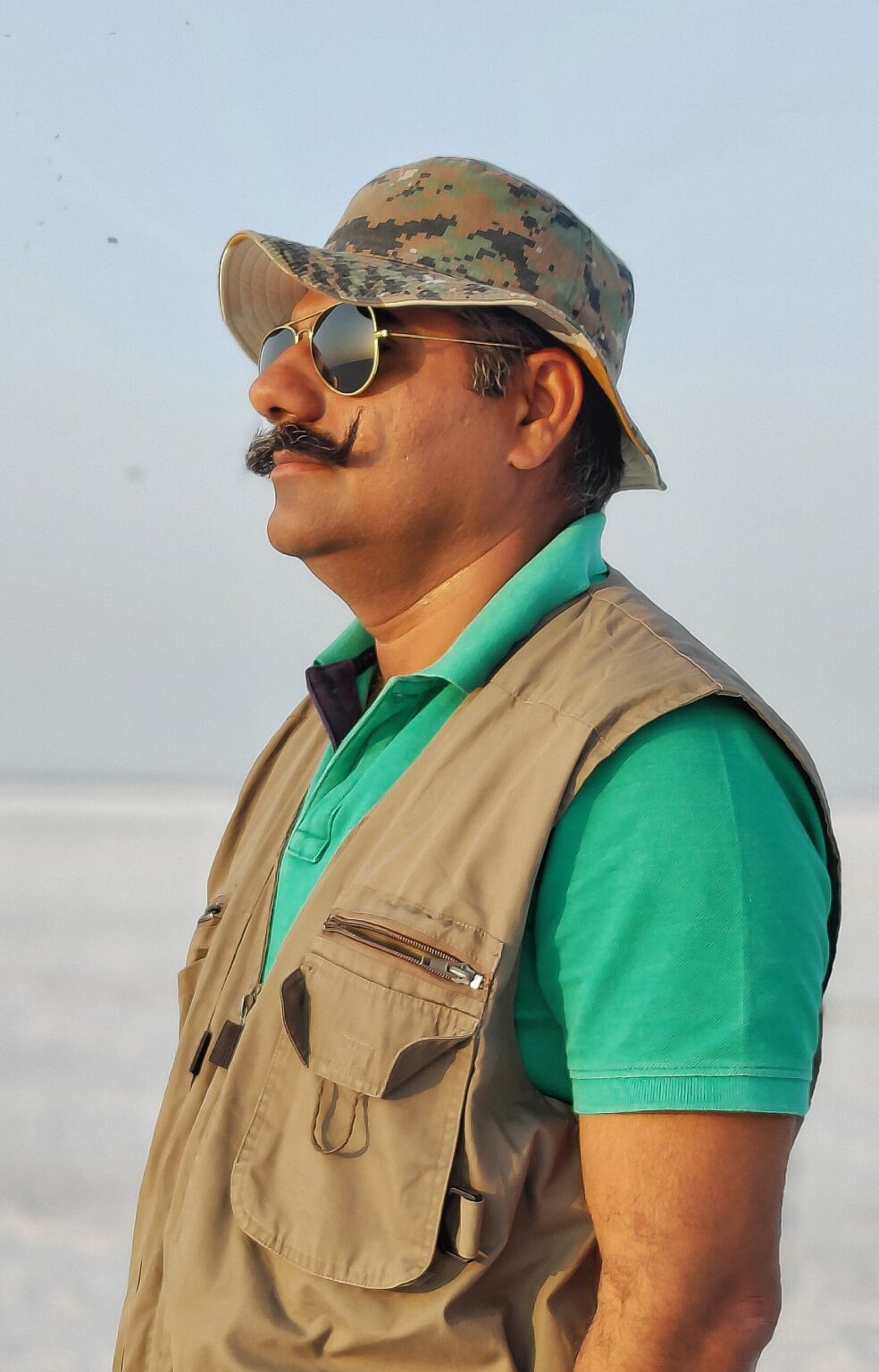
Naturalist | Conservationist | Founder – Kunj Homestay & Kutch Fossil Park
Naturalist | Conservationist | Founder – Kunj Homestay & Kutch Fossil Park
Kutch: Where Deep Time, Desert Wildlife & Living Landscapes Converge
Kutch: Where Deep Time, Desert Wildlife & Living Landscapes Converge
Great Rann of Kutch, Gujarat
Kutch is a land where deep geological time, resilient desert wildlife, and living cultural landscapes intersect. From Jurassic-era fossils and shifting salt deserts to rich birdlife and elusive mammals, this webinar explores how geology, biodiversity, and responsible nature-based tourism come together in one of India’s most extraordinary natural regions.
Landscapes & Habitats of Kutch
Kutch is India’s largest district, uniquely shaped like a tortoise — a reference to its ancient Sanskrit name Kachchhap. The region is bordered by the White Rann desert in the north, the Arabian Sea in the south, and features a mosaic of grasslands, wetlands, scrub forests, hills, coastal zones, and deserts in between.
This exceptional diversity of ecosystems supports a rich range of flora and fauna, making Kutch one of India’s most important natural landscapes for wildlife observation and conservation.

- 15th Jan 26 (Thursday)
- 04 PM IST
- Live on Zoom
- Host ~ Vikramsinh Sodha
Kunj Homestay & Kutch Fossil Park
Located near the Dhinodhar Hills and the Bhukhi River, Kunj Homestay is surrounded by forested hills and natural landscapes, offering a quiet, immersive stay in nature. Guests are hosted in comfortable cottages with modern amenities and served authentic Kutchi and Gujarati cuisine.
Within the property, Kutch Fossil Park showcases fossils of vertebrates, invertebrates, rock formations, and gemstones collected across the region—offering a rare opportunity to connect with Kutch’s deep geological time.
Why This Work Matters
Vikramsinh Sodha’s work illustrates how deep-time geology, desert wildlife, living landscapes, and community-led tourism can converge to create meaningful, educational, and conservation-focused travel experiences—while safeguarding one of India’s most remarkable natural regions.
What You’ll Learn
Inside The Live Webinar
#1
Wildlife & Birdlife Highlights
Kutch supports over 350 species of resident and migratory birds and 20+ species of wild mammals, shaped by seasonal rhythms and ancient landscapes.
#2
Notable Resident Birds:
White-naped Tit, White-bellied Minivet, Painted Sandgrouse, Black Francolin, Stoliczka’s Bushchat, and Indian Bustard
#3
Passage Migrants (Aug–Oct):
European Roller, Blue-cheeked Bee-eater, Spotted Flycatcher, Rufous-tailed Scrub Robin, Red-backed Shrike, and Eurasian Cuckoo
#4
Winter Visitors (Nov–Feb):
Grey Hypocolius, Sociable Lapwing, Saker Falcon, Trumpeter Finch, Long-legged Buzzard, Desert Warbler, Crab Plover, and Great Knot
Meet Your Host
Vikramsinh Sodha
Vikramsinh Sodha is a seasoned naturalist and conservation practitioner with over 15 years of field experience in the Great Rann of Kutch, Gujarat. His work centres on understanding and interpreting the region’s unique geological history, wildlife, and evolving landscapes.
He is the founder of Kunj Homestay and Kutch Fossil Park, which houses a remarkable private collection of more than 10,000 fossils—many dating back to the Jurassic period (around 206 million years ago). Originally collected by his father, this collection offers rare insights into Kutch’s deep-time geological past.
Vikramsinh has extensively explored Kutch’s deserts, grasslands, wetlands, and hills, documenting rare species such as the Rusty-spotted Cat and Caracal. His work on desert-dwelling small cats has been featured in National Geographic – Small Cats of India, reflecting his contribution to wildlife research and awareness.